
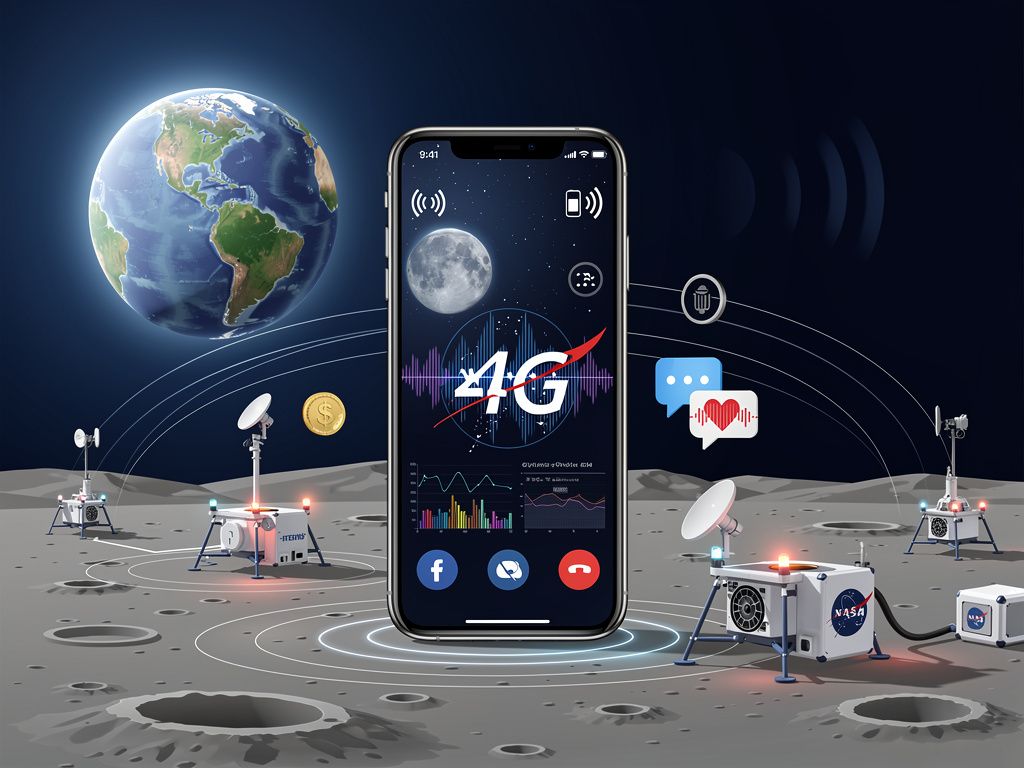
NASA's Lunar Communications Revolution: How Consumer Smartphones Are Transforming Deep Space Missions
NASA explores using commercial smartphone tech for lunar comms, enhancing deep space missions with innovative, cost-effective solutions.
The article discusses a groundbreaking shift in NASA's approach to deep space communications, specifically focusing on lunar missions. Traditionally, space communications have relied on bespoke, highly specialized, and extremely expensive hardware. However, a "revolution" is underway, driven by the increasing sophistication and robustness of consumer-grade technology, particularly smartphones. The core idea is to leverage the mass-produced, advanced components found in modern smartphones – such as high-performance processors, sophisticated cameras, and miniaturized radios – for space applications. This paradigm shift offers several significant advantages: Firstly, cost reduction. Utilizing off-the-shelf or slightly modified commercial components can drastically cut down the development and manufacturing costs associated with space-qualified hardware. This opens up opportunities for more frequent missions and allows for greater risk tolerance with less expensive equipment. Secondly, increased capability and miniaturization. Smartphones pack immense processing power and data storage into incredibly small packages. This allows for more complex tasks to be performed on board smaller spacecraft, or even directly by astronauts. For lunar communications, this could mean more efficient data transmission, improved navigation systems, and enhanced scientific data collection. Thirdly, accelerated development cycles. The rapid pace of innovation in the consumer electronics sector means that new, more powerful technologies are constantly emerging. By adapting these technologies for space, NASA can potentially reduce the long lead times typically associated with space hardware development. The challenges, of course, include adapting consumer tech to withstand the harsh environment of space (radiation, extreme temperatures, vacuum), ensuring reliability, and developing robust software interfaces. However, the potential benefits – a more agile, cost-effective, and capable approach to deep space communications – appear to outweigh these hurdles, marking a significant step towards democratizing access to space technology and enabling ambitious future lunar and planetary explorations. This approach could be key to sustaining a long-term human presence on the Moon and facilitating future Mars missions.